
Braking tests are a key step in the approval process for our axles and vehicles. They ensure safety, regulatory compliance, and consistent braking performance in all operating conditions.
At Monroc, these tests follow two complementary phases: internal testing, followed by official homologation tests conducted with accredited bodies such as UTAC.
1. Internal Tests: Validating Performance Before Homologation
Testing begins long before reaching an official test track. At Monroc, these evaluations take place continuously throughout the year.
Step 1: Specifications and Selection of the Braking System
Every two weeks, a meeting brings together the sales team, the engineering office, and management.
Objective: to precisely define the specifications of the vehicle to be approved.
Based on these requirements, we select a brake system, tested on our in-house bench and TÜV-approved.
Once the complete braking system has been chosen, testing can begin.
Step 2: Building the Test Vehicle
Our teams then build a complete vehicle dedicated to testing:
-
preparing the vehicle blueprint
-
assembling the axles and suspension
-
installing the hydraulic or pneumatic control circuit
-
assembling the chassis
Depending on the configuration, this process takes between one and three weeks.
Step 3: Loading, Weighing, and Performance Calculations
Before road tests, the vehicle is loaded and weighed to determine the expected braking performance:
-
unladen braking
-
laden braking
-
force balance
-
front/rear distribution, etc.
These values then serve as references on the track.
Step 4: Brake Bedding
Before any test, the brakes must be properly bedded in to ensure stable and repeatable behavior.
Once this is complete, the vehicle is ready for internal tests.
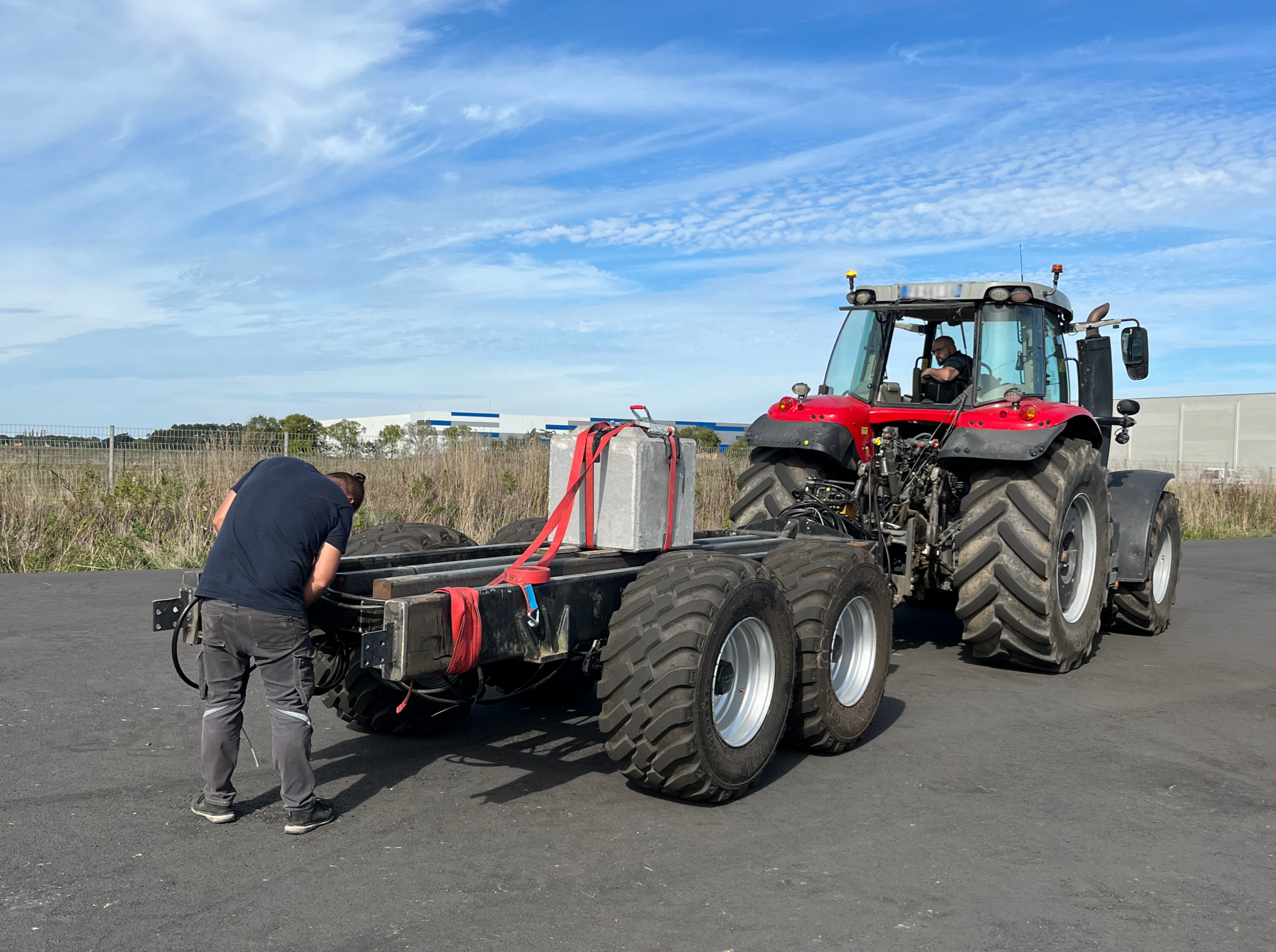
Step 5: Internal Track Tests at Monroc
We then verify all criteria required by regulations:
-
laden braking
-
unladen braking
-
line rupture
-
corrector failure
-
parking brake performance
-
system response time
Each adjustment can influence the next, which is why the entire system must be optimized until the required performance is achieved.
Once these internal tests are successful, we can book an official test track:
-
30 km/h → braking force = 35% of the axle-supported weight
-
40 km/h → braking force = 50% of the axle-supported weight
2. Official Homologation Tests: UTAC Validation
When internal tests are conclusive, we move on to official homologation.
Two configurations are possible:
Option 1: Tests Performed Directly by UTAC
UTAC conducts the tests on its tracks in Montlhéry.
The Monroc team is present only to adjust settings if necessary.
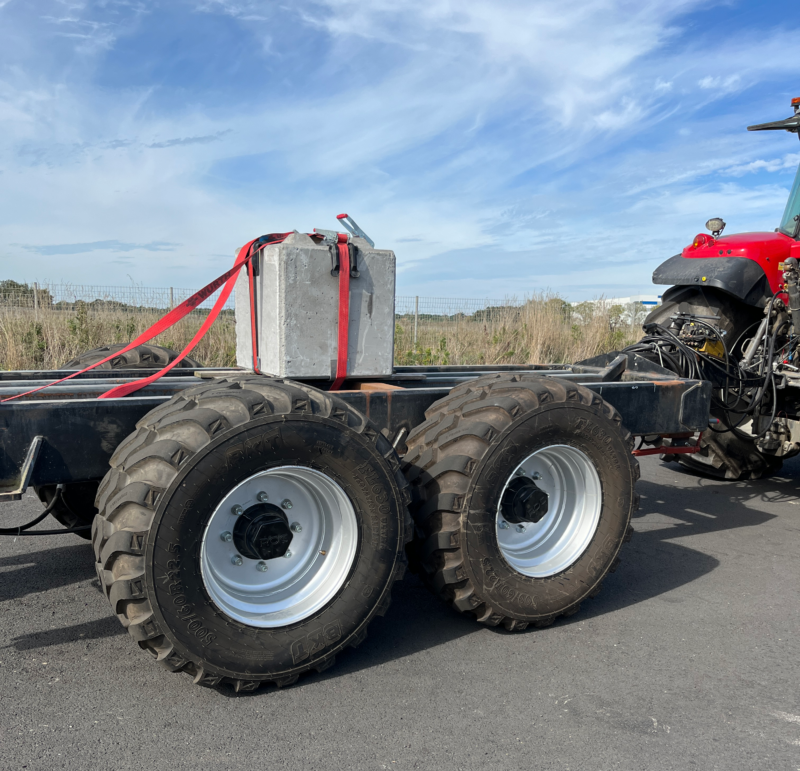
Option 2: Tests Performed By and At Monroc, With UTAC Supervision
The tests are carried out by Monroc on our own premises, under UTAC supervision.
In this case, we use calibrated equipment:
-
hydraulic/pneumatic simulator
-
V-Box system for measuring braking distances
-
instruments for checking response times
Homologation Duration
A full homologation generally takes 2.5 weeks and up to 5 weeks, including one week of testing.
3. Final Technical File
Once the tests are passed, we compile the complete technical file for UTAC, which will then issue the official approval document.
This file includes:
-
all test results
-
the inspections carried out
-
vehicle drawings and specifications
-
regulatory compliance elements